

Other house
Paper project
Year: 2016
Status: Paper Project, exhibitied at CAMPO gallery in Rome, FRAC Centre-Val de Loire and at Budsjord pilegrimsgård
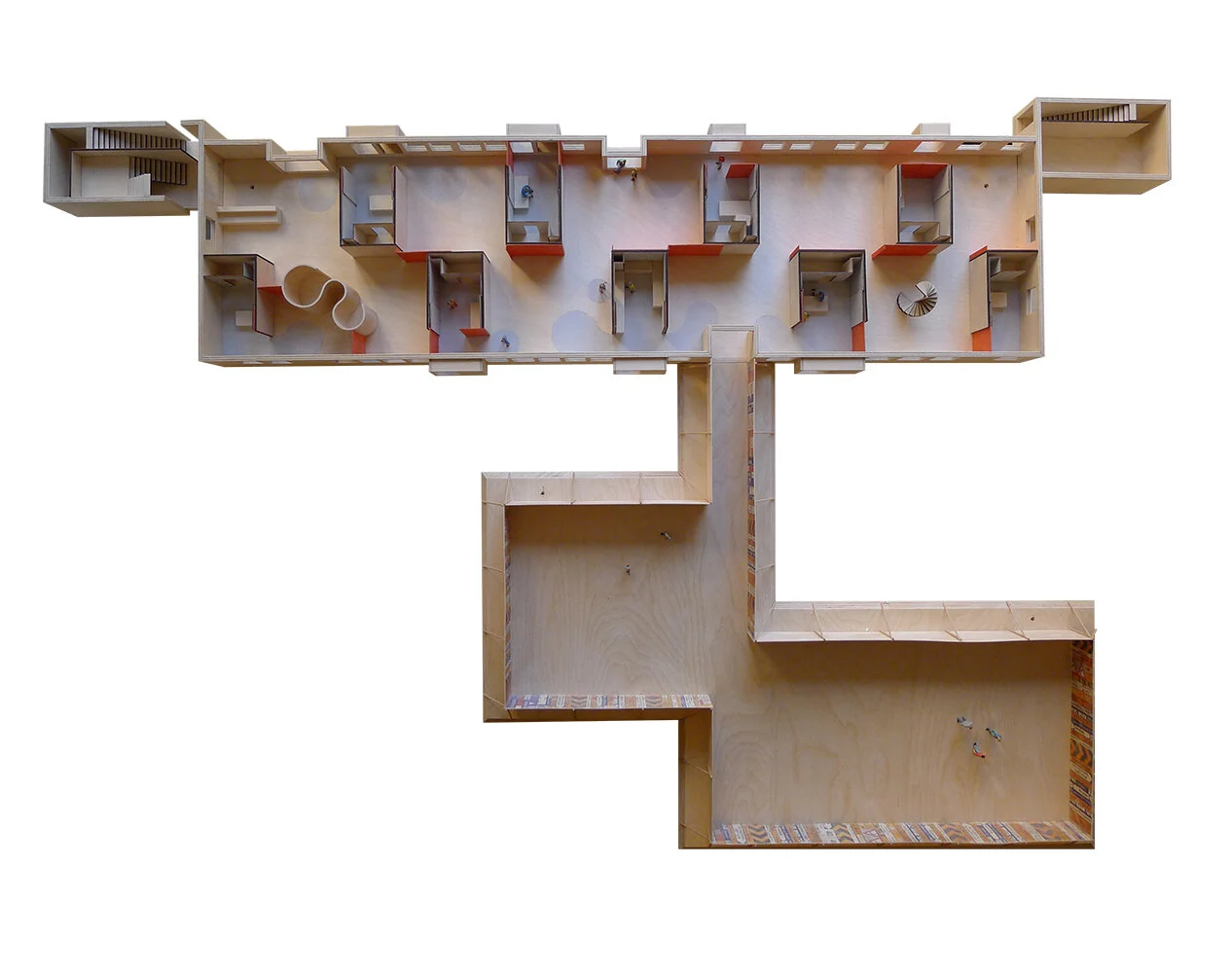
manthey kula was given a framework of a human emotion: hope, and an architectural principle: system. These two concepts were to be used as lenses to reflect upon two images by Walter Pichler from the FRAC archive of experimental architecture.
One structure, two inhabitants, one building, two territories, one nature.
The life in the house is told from A – Y.
Z is another story.

Window
Distant silence from the empty house below,
Rising to the rituals of the body, shedding warmth of sleep in front of glass.
Night is leaving, day is coming slow,
Cold feet on the floor while I watch the morning pass.
Early light across the curving wall, pointing to an aim.
Sudden movement, modest glimpses, all concluded in mutual recognition:
Rounded shoulder, naked neckline and the features of another face.
Thinking: Should I think of him by name?
Constant concrete framing figures fixed in opposition,
Projected longing to a shared horizon, nestled in between suspended space.


Table
Descending slowly into waves of light.
Where a solid echo protects the attributes of home.
Context – wild and tended – emerging into sight,
Reflected sun draws maps for eyes that roam.
Steel and concrete positioned with decision,
Fulfilled geometries eclipse the other life.
Sharing structure: are we seated at a common table?
Domesticity unfolds inside precision,
Space divides existences like a knife.
Our presences in orbit are not stable.


Fire
Expansion turning to contraction till the skin is circumscribed by wall,
Horizontal light moves inwards, finding refuge in a darkened apse.
Enclosed by cast construction, the threshold to the world is tall,
Your heat transported through the structure; a momentary lapse.
Balanced span and optimistic tension,
Support the sturdy slab and tender use,
Solitary flames uphold the common mound.
Inside a rare dimension,
Space is tight, but time is loose.
Looking outside to the outside ground.


Mirror
Rapid run to a common point,
Where independent systems meet and measure.
Separated and connected in a membrane joint,
Reflected eyes give pleasure.
Trembling surface, resonating footsteps in a stair,
My image in the mirror standing still:
Will you feel my presence when you pass?
Sudden shivers and a scent of moss is brought by air,
Silence kept by doubt and not by will.
Cyclic life is calling through the glass.


Forest
The house is left behind for open sky.
Beneath the feet a certain softness of the earth,
Myriads of nuances hit the eye:
Living matter reminiscent of birth.
Where you are enters my concern,
As I pass through heel high heather.
The ground is changing to a gentle slope.
I seek the forest in order to return,
Trunks and branches twined together.
This community of beings gives us hope.


Forvik ferry port
Vevelstad, Norway
Location: Forvik, Vevelstad, Norway
Year: 2015
Status: Built
Client: Norwegian Public Roads Administration
Photo Credit: manthey kula
A transparent structure through which one does not only see the old tavern across the bay , but also every part of the construction.
The service building consists of two concrete gable walls and an up side down vault of 10mm galvanized steel spanning between, and cantilevering past them. Underneath the roof are insulated spaces of slender wooden frames and glass. From inside the rooms one can see the continuous steel vault above the glass ceiling. The structure has an asymmetrical section with cantilevering awnings towards the south. The appearance of the building was never an intention in itself, but a result of the desire to expose every part of the structure and to make use of the static potential in the inverted vault.
The main focus for the landscape was to minimize the traffic area and give the intervention in the vulnerable coastal terrain a distinct, but subordinate form. This is achieved by eliminating ditches and retaining walls and by careful planning of the cutting of bedrock.


Ode to Osaka
Oslo
Location: The National Museum - Architecture, Oslo, Norway
Year: 2015
Status: Built
Client: The National Museum - Architecture
Photo Credit: Annar Bjørgli, Urs Meier Aegler, manthey kula
Manthey Kula was commissioned to develop a concept for realization of Sverre Fehn’s un-built competition proposal for a breathing space for the Osaka World Fair in 1970. The installation was built in Fehn’s last building; The Ulltveit Moe pavilion of the National Museum.
The installation’s relationship to the initial competition entry had to be solved and sorted out: Technical issues, matters of form and material, geometry, size and siting, and eventually that of exhibition content.
The work was not Sverre Fehn’s project for the Osaka World fair, but a contemporary installation based on, and honoring his idea. It was a structure consisting of an airlock building and an inflated, moving space. All details were developed so that the installation could be dismounted and re-erected.
There were no objects on show – only space.


Innisfree
Sligo, Ireland
Year: 2015
Status: Competition
Open competition for an installation celebrating William Butler Yeats 150 years anniversary
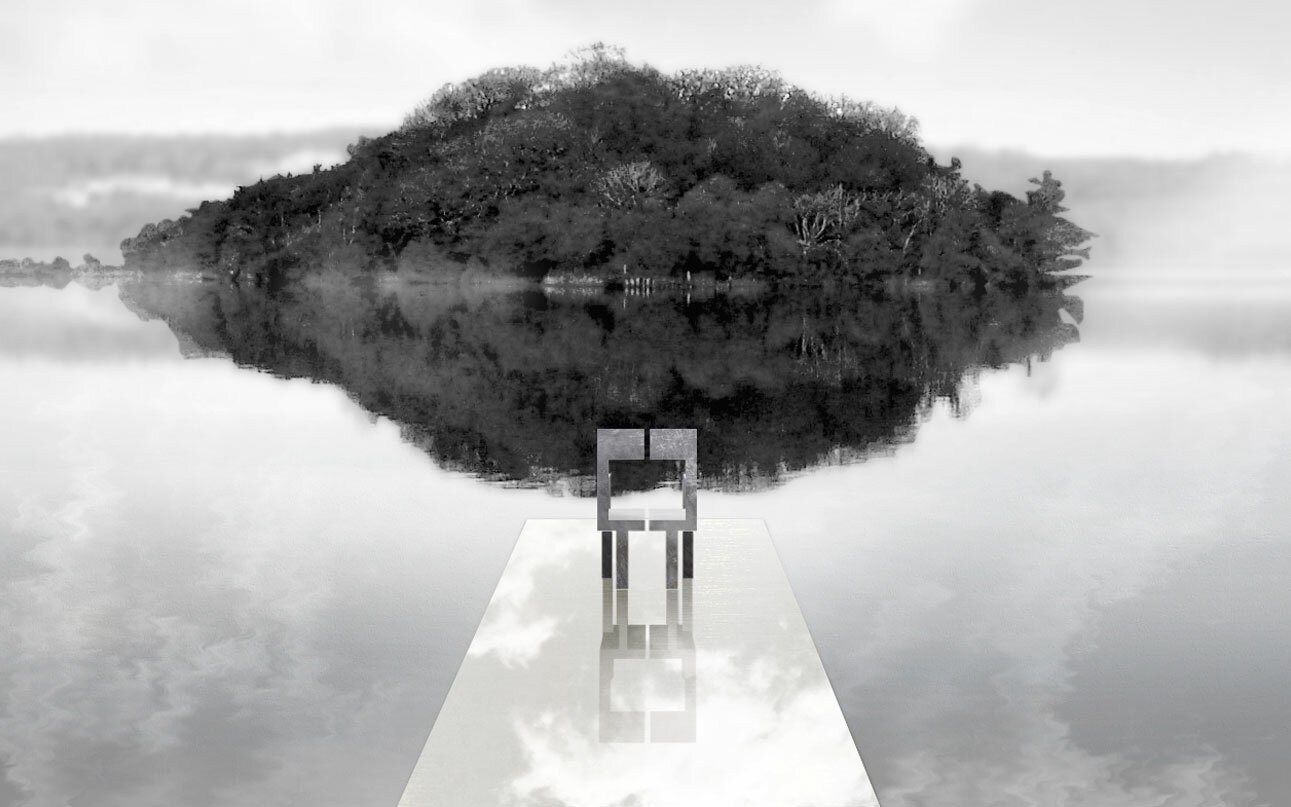
What to protect? That which is still untouched and that which we long for
What to give? A specific place with a universal resonance
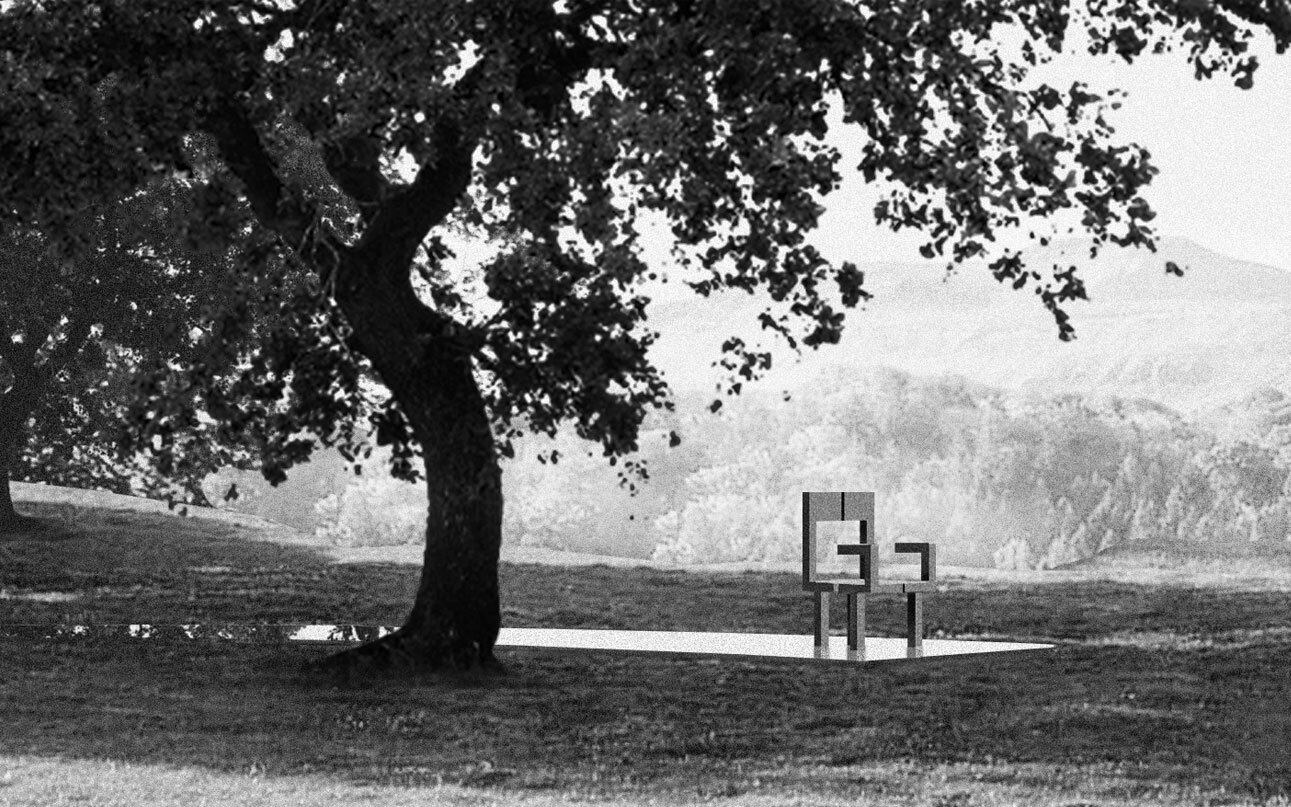
A highly polished stainless steel surface onto which a sculptural, yet functional steel chair is welded. Mounted on pontoons dimensioned to support the platform right above the water level.
In due time the steel floor will be transported to its final position at the university campus where the chair will continue to support lingering dreams.



Book crossing
Taipei, Taiwan
Location: Taipei, Taiwan
Year: 2014
Status: Built
Client: Taipei Free Artist's Association
Photo Credit: manthey kula
The small kiosk was part of Taipei’s preparation for becoming Design Capital 2016. Four international architects were invited to develop tiny structures with a public function for specific sites in the city.
Manthey Kula designed a book crossing where people of the neighborhood could meet and exchange used books. The white structure contrasted the colorful context, and the minimal interior captured scenes from the passing life and ever-changing city light.


MK521
Venice, Italy
Location: The Nordic Pavilion, Venice, Italy
Year: 2012
Status: Built
Client: The National Museum - Architecture
Photo Credit: manthey kula
MK521 was a sound installation for Venice Biennale 2012, the 50th anniversary of Sverre Fehn’s Nordic pavilion.
The project had two sources: The ffictional dialogue between Sverre Fehn and Andrea Palladio written by Fehn in 1964. and the module of 521 millimeters that Fehn made use of in the design of the iconic building.
The installation hung from one of the openings in the roof of the pavilion, designed to give space for a tree . The recorded dialog was played from a speaker suspended in a tailored trunk made of natural wool felt. During transport the piece was contained in a crate of fiberboard. When installed, the crate served as seating for the listener. The crate measured 521x521x521 millimeters, thus fitting the grid of the pavilion floor.


Tribunal for the displaced
Paper project
Year: 2012
Status: Paper Project, exhibitied in Venice, Italy
Photo Credit: manthey kula
The tribunal gives architectural substance to questions concerning the individual and the collective, freedom and totalitarianism, silence and speech.
The project examines the possibility for a new social and architectural program based on interpretation of a contemporary global situation. It suggests a shift of questions concerning residency for migrants away from the national economic realm to the common ground of humanity. The tribunal is an institution based on the constant laws of compassion rather than on the ever-changing political agendas and bureaucracies. It is one of several courts that are established in regions of migration. An international body of justice administers these courts.
The displaced is whoever seeks legal residence, be it a refugee or a paperless immigrant. The objective of the tribunal is to decide whether the permit should be granted. The displaced testifies to a jury of six laymen, one from each continent appointed for a month-long service by the international administrative body. The assessment of each testimony is based solely on the jury’s opinion of the story of the displaced. If the permit is granted it is immediately produced and the migrant can leave the tribunal as a resident. If the jury is not convinced by the testimony he or she must return.
Each testimony and each jury decision is documented and archived. The archive of the tribunal will become a source to the understanding of a global situation and of the human heart.
The tribunal is situated in Cannaregio at the end of Calle de la Beccarie, overlooking Ponte Della Libertá.

THE DISPLACED
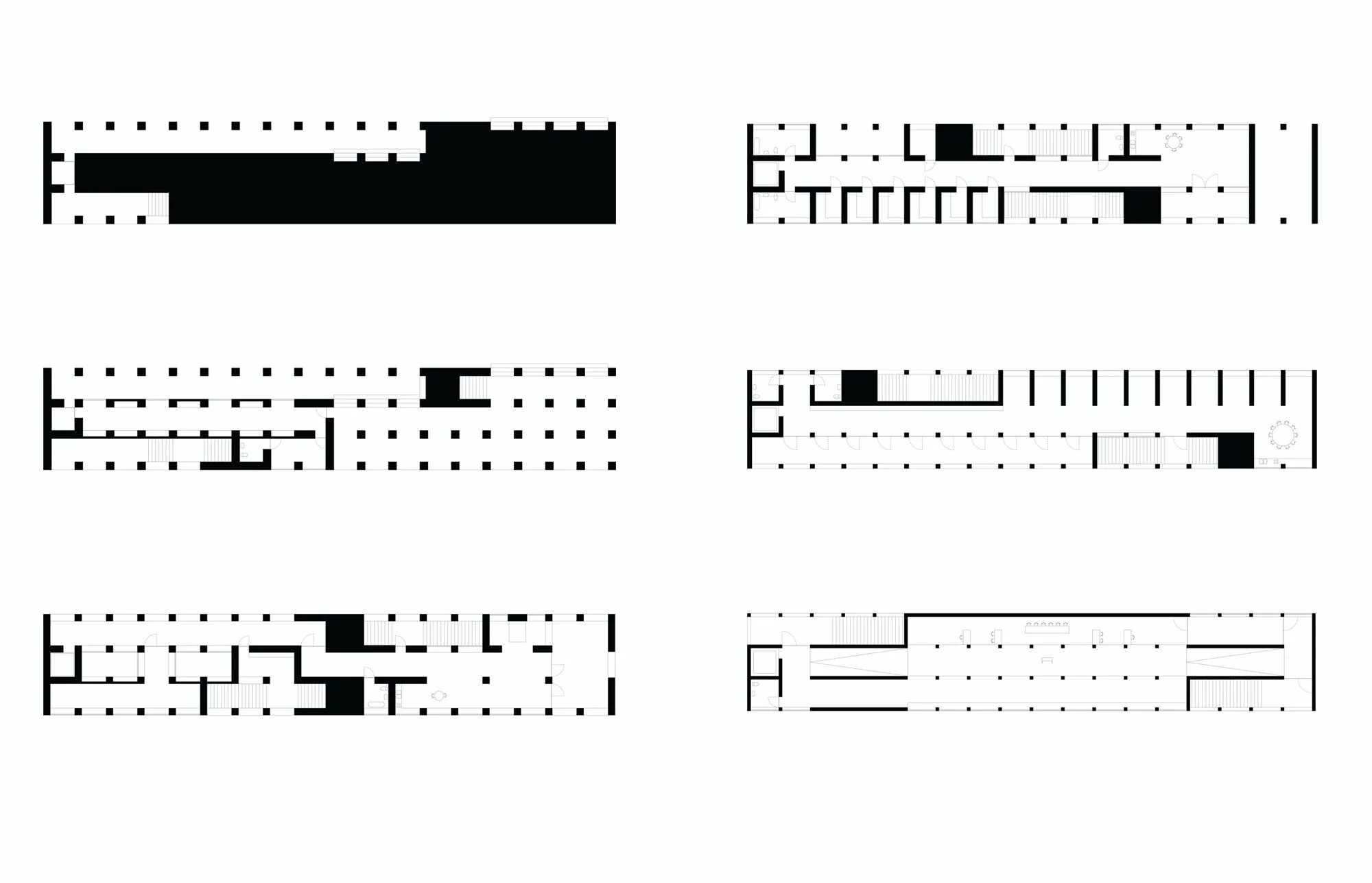
Each morning a group of displaced arrive at the dock by boat from a center on the mainland. The group ascends to the third floor where they await their turn to testify. The time spent in the tribunal waiting is stressful to most of the migrants. The secretary accompanies each migrant to the tribunal on the fourth floor. The hearing usually takes less than two hours, some times more. The desicion of the jury is given without disussion among its members. As such, every desicion is an individual concern for each memnber of the jury. If the jury finds the migrant’s testimony convincing, a residence permit is produced immediately by the notary. After having received the permit the new citicen leaves the tribunal, entering the city through the square in front of the building. At the end of the day the refused, if any , are transported back to the main land, later to return to their native contries.

THE PUBLIC
The hearings are open to the public. Sixty seats in the tribunal are intended for citizens, relatives, journalists, students and researchers. However, no interference of the testimonies is allowed. Apart from the voice of the migrant, and some muffled sound when the hands of the jury are shown after the testimony is over, the tribunal is very quiet. The square outside the tribunal is busy with people: the air is filled with anticipation and exclamations of joy and relief. Only seldom are there outbursts of anger or silent grief.

THE JURY
The jury consists of six laypeople, one from each continent. They are appointed for a month’s service by the international administrative body. Their assignment is to decide whether the displaced should be granted residency based on her or his testimony. The decision of the jury is a majority desicion where at least five of its members have to agree on the outcome. Each case is set without discussion. While in Venice, the six jurors stay in the quarters on the second floor of the tribunal building, where the meals are prepared and served by the caretakers. In the evening the jury members gather in the parlour or on the terrace to recapitulate the testimonies of the day.

THE SECRETARY
The secretary of the tribunal must speak Italian, English, Spanish and Chinese fluently. It is the secretary’s duty to facilitate the hearing procedures, set the schedules, inform each jury and the public of routines and requirements, arrange for qualified interpreters to be present when needed, and transcribe every testimony for archival purposes. The secretary is not expected to stay on for more than two years.

THE INTERPRETERS
Interpreters of Venice are summoned to the tribunal when their service is needed. In order to qualify one has to sign a non-disclosure agreement. The number of interpreters present each day depends on the origin of the migrants and the composition of the jury. The scheduling of the interpreters is organized by the secretary.

THE NOTARY
The notary is an official clerk whose role is to issue legally correct residency permits to those migrants accepted by the jury. The notary does not engage in the drama of the tribunal. While the displaced give their testimonies the notary arranges the documents and the legal stamps on the desk according to height, size and number.

THE CARETAKERS
The caretakers, a former migrant couple, maintain the daily routines in the building. They prepare meals for the displaced and look after the jury quarters and the waiting rooms. From their flat on the first floor they can reach all parts of the building. They are the only ones that have access to the stairway of the displaced.
THE ARCHIVIST
Every morning the archivist receives a file from the secretary where the testimonies of the day before are transcribed to English, Chinese and Spanish. The testimonies are archived according to date, country of origin and category. The largest categories in the archive are: war, persecution, famine, and hope. When the archivist is not filing or finding testimonies for citizens, journalists, relatives, researchers and students, he sits in his office trying to fathom the existential consequences of the outcome of the ongoing hearings.


Modular hydro power stations
Ditti / Lappskaret / Krogstad / Ellenelva / Mortendalselva / Saldalelva, Norway
Location: Ditti / Lappskaret / Krogstad / Ellenelva / Mortendalselva / Saltdalelva, Norway
Time: 2010
Status: Unbuilt, 1st prize invited competition
Client: Fjellkraft as
Photo Credit: manthey kula
System for prefabrication of modular hydro power stations. Similarly formed wall- and roof elements in solid wood or concrete to be assembled responding to changing site conditions and different technical requirements. In spite of individual differences the buildings are recognizable as part of the company's profile.


Studio Pilestredet
Oslo
Location: Pilestredet, Oslo, Norway
Year: 2010
Status: Built
Client: Private
Photo credit: Manthey Kula
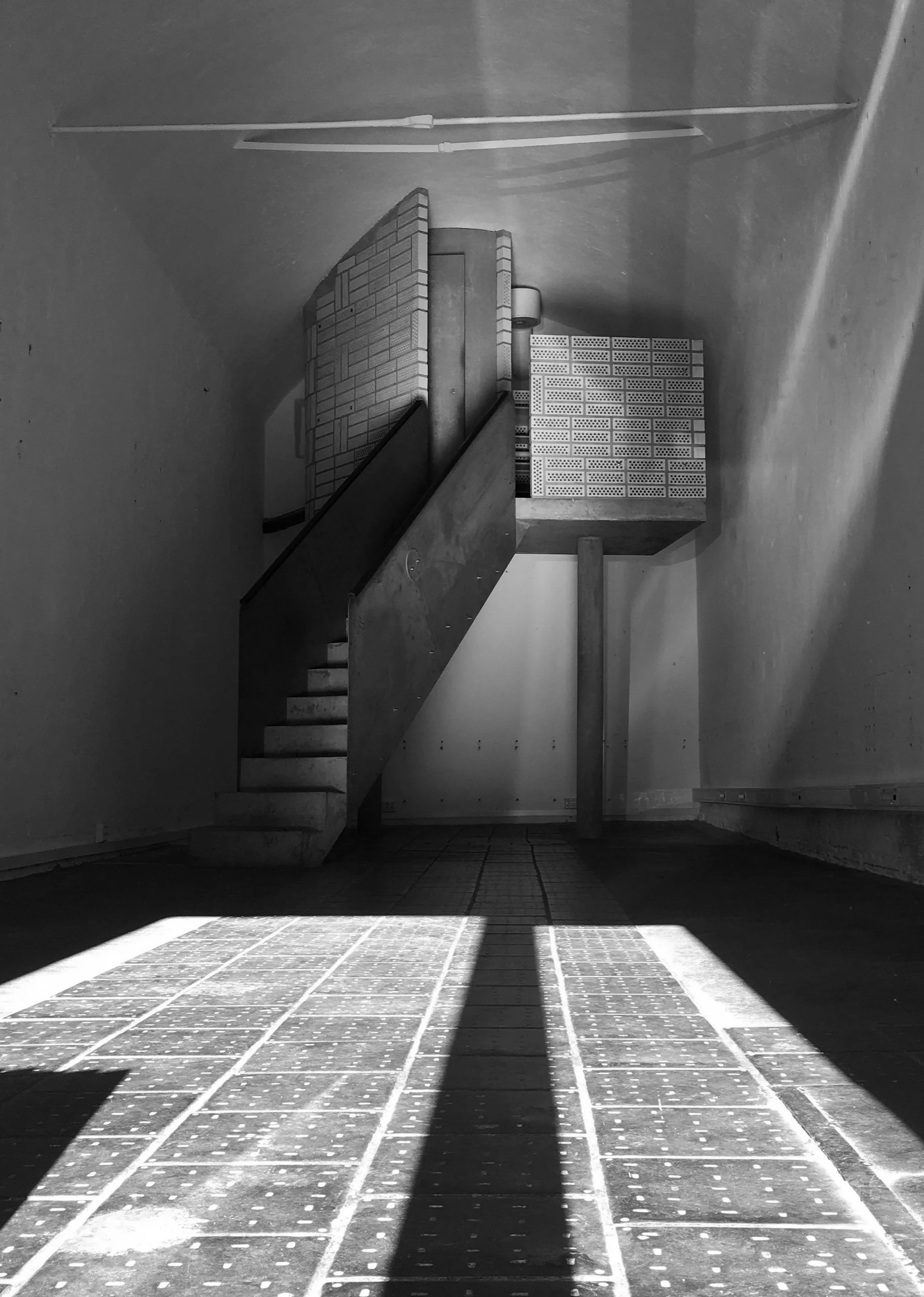
Transformation of an old industrial space into a small studio.
The vaulted room had no infrastructure, only a drain oddly placed high up on the wall. An elevated brick structure containing a bathroom and a small kitchen added to the spatial experience and subdivided the room into different zones.




Myrbærholmen fishing bridges
Møre og Romsdal, Norway
Location: Averøy, Møre og Romsdal, Norway
Year: 2010
Status: Built
Client: Norwegian Scenic Routes
Photo Credit: manthey kula
The narrow bridge of the high speed road has always been a very good and quite dangerous fishing spot. The new cantilevering walkways provide secure ground for both fishers and tourist enjoying the view over the Atlantic Ocean.
The geometry of the walkways emphasizes the curvature of the Atlantic road that meanders between the islets of the rough coast. A cut in the rock provide parking space for both locals and tourists trying their luck with the fish. Ramps, stairs, walkways and waiting area are prefabricated in galvanized steel and mounted on the existing bridge structure. The railings of the bridge were designed to improve fishing for the disabled.


Fence
Bergen, Norway
Location: Bergen, Norway
Year: 2010
Status: Built
Client: The Directorate of Norwegian Correctional Service
Photo credit: Stein Bjørge, Manthey Kula
Low cost fence around the outdoor area of the temporary juvenile detention unit at Bergen prison. Recycled road signs replace the regular barbed wire perimeter, providing the inmates with references to places outside their limited situation. Places they might know or dream of.


Akkarvik roadside restroom
Lofoten, Norway
Location: Akkarvik, Lofoten, Norway
Year: 2009
Status: Built
Client: Norwegian Scenic Routes
Photo Credit: Paul Warchol
Award: Nominated for the Mies van der Rohe Award 2011
The rest room replaces an old facility that had been lifted off its footing by strong winds. Thus the small building needed to be heavy so that it would not easily be moved off the ground. The restrooms were conceived to present a pause from the impressions of the surrounding nature, offering an experience of different sensuous qualities. Thus the building is made of 10-12 mm sheets of structural corteen steel welded together on site. The thin steel sheets are braced by steel flanges where it is needed. The bracing gives an almost ornamental quality to the pragmatic spaces. Two large glass openings provide view to the sky and a reflected horizon. Surfaces that the visitors will get in contact with are made of stainless steel or covered in clear glass to prevent rust staining.


Skreda roadside restroom
Lofoten, Norway
Location: Skreda, Lofoten, Norway
Year: 2009
Status: Built
Client: Norwegian Scenic Routes
Photo Credit: Steinar Skaar
Low cost transformation of existing roadside restroom. Part of the dilapidated building was removed and protruding details cut away. The remaining volume was clad in fiber cement and surrounded by a new concrete platform defining the service and information area. Light fixtures were designed to be part of the standardized information system.


House Biristrand
Oppland, Norway
Location: Biristrand, Oppland, Norway
Year: 2008
Status: Built
Client: Private
Photo Credit: manthey kula
The house was to be built by the client and as such it was designed as a straightforward volume with a flexible structure leaving possibilities for the clients to develop their own solutions. The roof and three of the outer walls are in solid timber panels while the western wall is equipped with an open, flexible framework to accommodate recycled building elements.


Myrbærholmen fishingdock
Møre og Romsdal, Norway
Location: Myrbærholmen, Averøy, Norway
Year: 2008
Status: Unbuilt
Client: Norwegian Scenic Routes
Photo Credit: manthey kula
A dock from where one can fish safely in the often-rough seas along the Atlantic road. A stainless steel truss dimensioned to withstand a wave height of 14 meters. The dock is approached from the parking space through a passage cut in the bedrock.


Juvenile detention unit
Bergen, Norway
Location: Bergen, Norway
Time: 2008
Status: Feasibility study
Client: The Directorate of Norwegian Correctional Service
Photo Credit: manthey kula
Recognition: Exhibitied at the New Nordic exhibition at Louisiana Museum of Modern Art, Denmark
Project for a new spatial organization of a juvenile detention unit in an abandoned building at the Bjørgvin prison. The existing two-story structure is suggested transformed into a three story interactive prison.
The youth facility constitutes a small community of inmates and staff. The cell is designed such that the inhabitant, by way of flexible sliding doors, can affect his or her relation to the communal space outside the cell. From being a closed entity the cell can gradually unfold and such work as an instrument for communication and engagement.
Space – such as a prison cell – should not be used as punishment, but rather as vehicle for the individual in his/her journey back to the society.



Pålsbu hydro power station
Buskerud, Norway
Location: Tunhovd, Buskerud, Norway
Year: 2007
Status: Built
Client: Statkraft
Photo Credit: Per Berntsen
Award: Nominated for the Mies van der Rohe Award 2009
The generator chamber is situated as a free standing building in front of the 530 meters long dam, emphasizing the sculptural quality of the unbroken man made line through the landscape.
The structure consists of 15 load bearing precast concrete panels stacked around the turbine and generator. The 52 tons equipment is lifted in place by a crane supported by an in situ concrete framework. The protruding structure of the crane is covered in rough spray-on concrete. There are no gutters; stainless steel profiles are welded to the concrete panels to prevent water from entering the precast holes that serve as screens in front of windows and ventilation openings. The roof is made of prefabricated steel trusses.


Virginia
Paper project

Year: 1997-2001
Status: Paper Projects
Photo Credit: manthey kula
Aknowledgement: The Virginia project is part of the collection of the National museum, Norway
The Virginia Series consists of four projects based on female literary characters. The projects have been exhibited at the Finnish museum of architecture in Helsinki, Galleri Rom, Oslo, The Artists Association, Baku, Pilegrimsgården Budsjord, Dovre and the National museum, Oslo.

Vanessa Baird: Go Down with Me
Oslo
Location: Oslo
Client: MUNCH
Photographers: Ove Kvavik/The Munch Museum
The first exhibition of Vannesa Baird at MUNCH presents more than 500 works.


Trembling Earth Edvard Munch
Oslo
Location: Oslo
Client: MUNCH
Photographers: manthey kula and Ove Kvavik/The Munch Museum
Exhibition focusing on Edvard Munch’s depictions of nature.


