

Mobility hub in Hyllie
Malmö, Sweden
Location: Malmö, Sweden
Status: Limited competition
Client: Parking Malmö
Illustrations: manthey kula
Proposal for a mobility hub in Hyllie, Malmö. Structure in recycled concrete, cladding in rammed earth tiles. In collaboration with Lundvall Payne, Gatun Arkitekter and Price & Myers.


National Memorial for 22 july in the Government Quarter
Oslo
Location: Oslo
Status: Limited competition
Client: KORO
Photographers: manthey kula
As one of ten international teams Manthey Kula delivered a proposal for a National memorial in commemoration of the terror attacks of 22 july 2011 in the new Government Quarter in Oslo.


Entrance roof
Baden-Württemberg, Germany
Location: Baden-Württemberg, Germany
Status: Built
Client: Private
Photographers: manthey kula
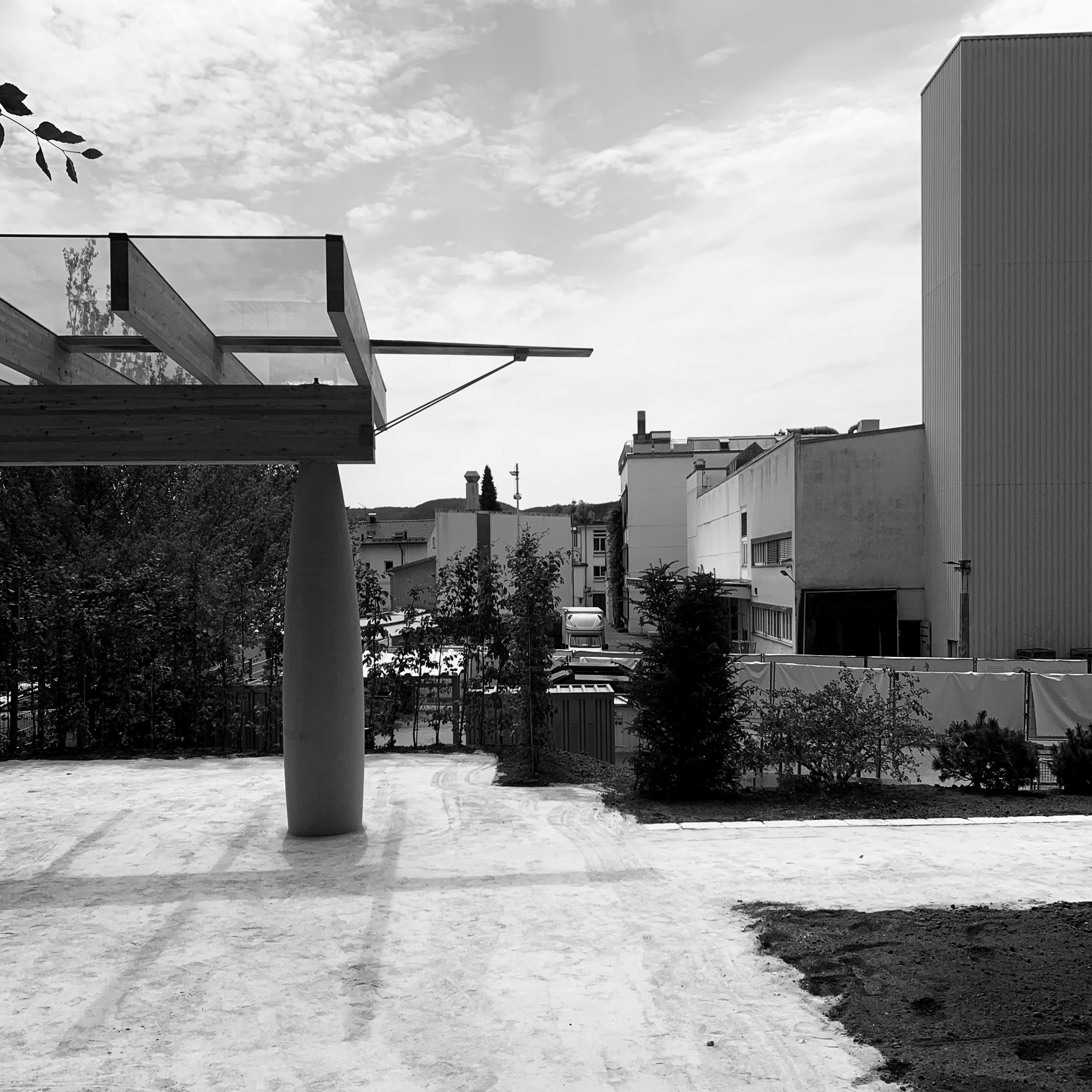
The roof covers the entrance to a park established for the study of rituals related to mourning and commemoration.
A glue-laminated larchwood beam spanning between two sandstone columns.




The mourning buildings
Baden-Württemberg, Germany
Location: Baden-Württemberg, Germany
Status: In progress
Client: Private
Photographers: manthey kula
Two buildings to be built in a private park established for the study of rituals related to mourning and commemoration.
The buildings will be shell constructions in cast bronze over brick vaults.


National Memorial at Utøyakaia
Hole, Norway
Location: Utøyakaia, Hole, Norway
Year: 2022
Status: Built
Client: Statsbygg
Photographers: Karin Björkquist & Sébastien Corbari
In collaboration with Bureau Bas Smets
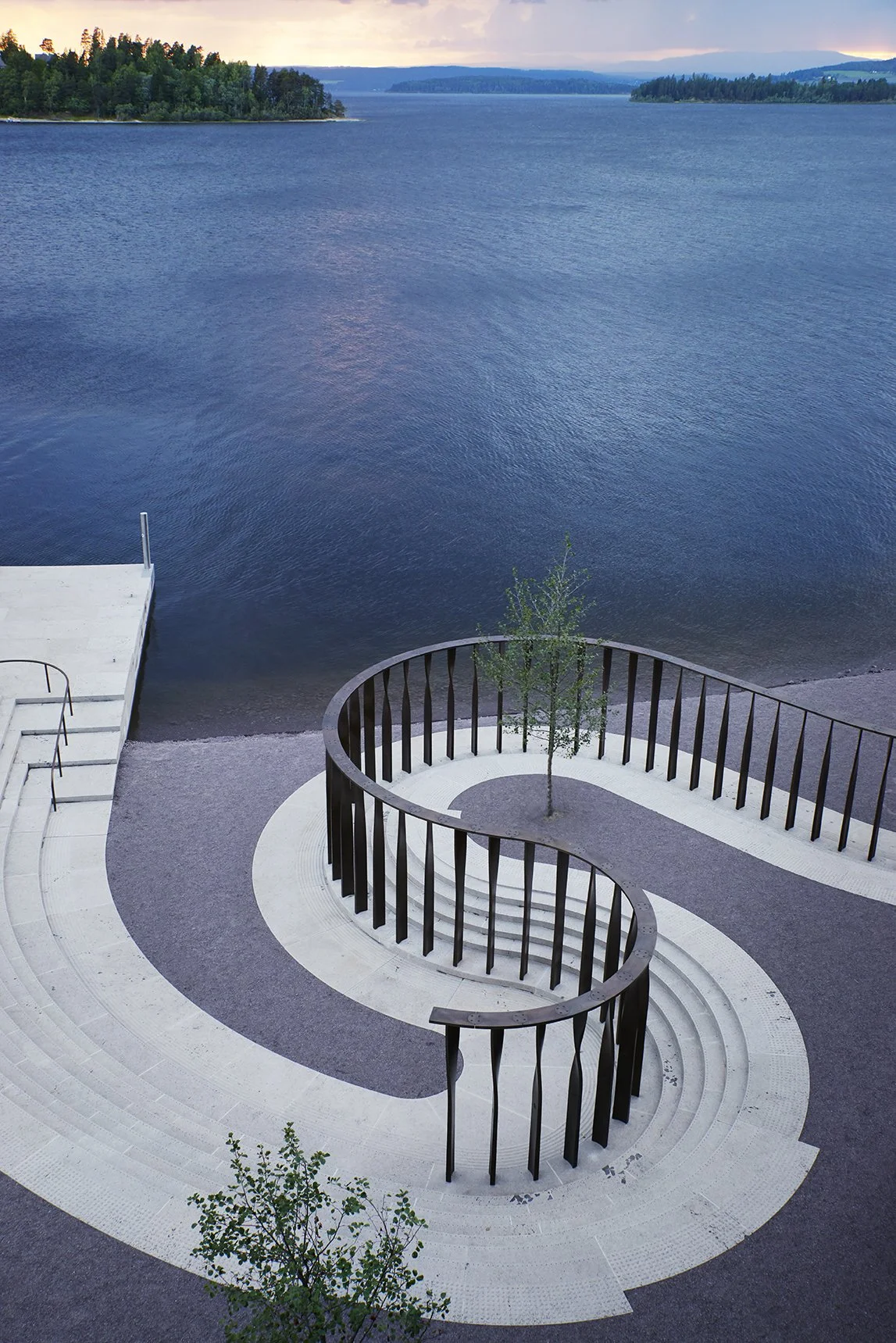
The project is a national memorial for the victims, survivors, and rescuers of the two terror attacks that hit Norway on Friday 22 July 2011 where 77 people were killed; 8 in the bombing of the government quarters, 69 on Utøya island at the summer camp of the Norwegian Labour Party’s youth organisation.
The project is situated on the mainland across the waters from the Utøya. From here the terrorist took the boat to the island, this was the place youth that managed to save their lives by swimming across the water met help and where injured victims were taken care of in the beginning of the rescue operation.
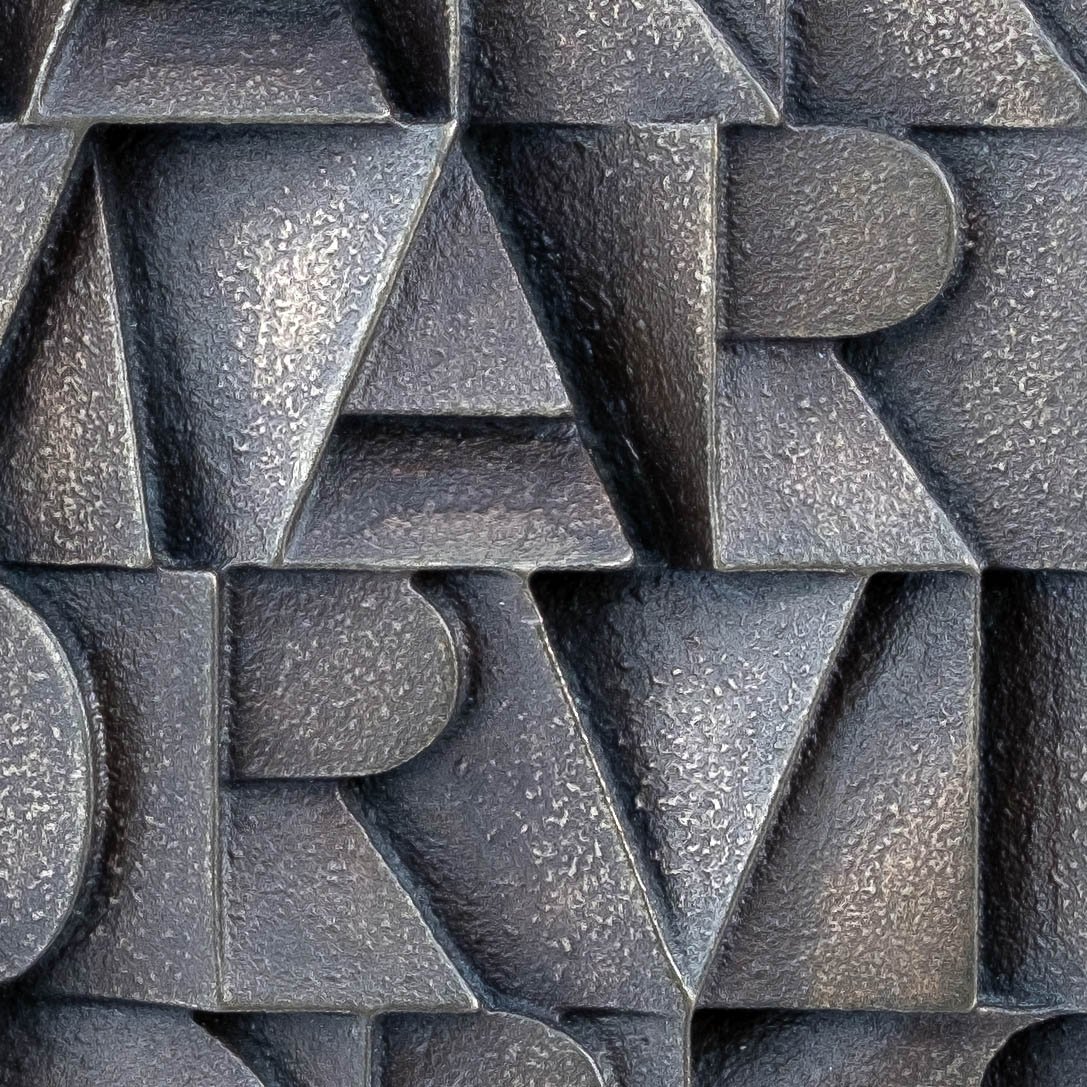
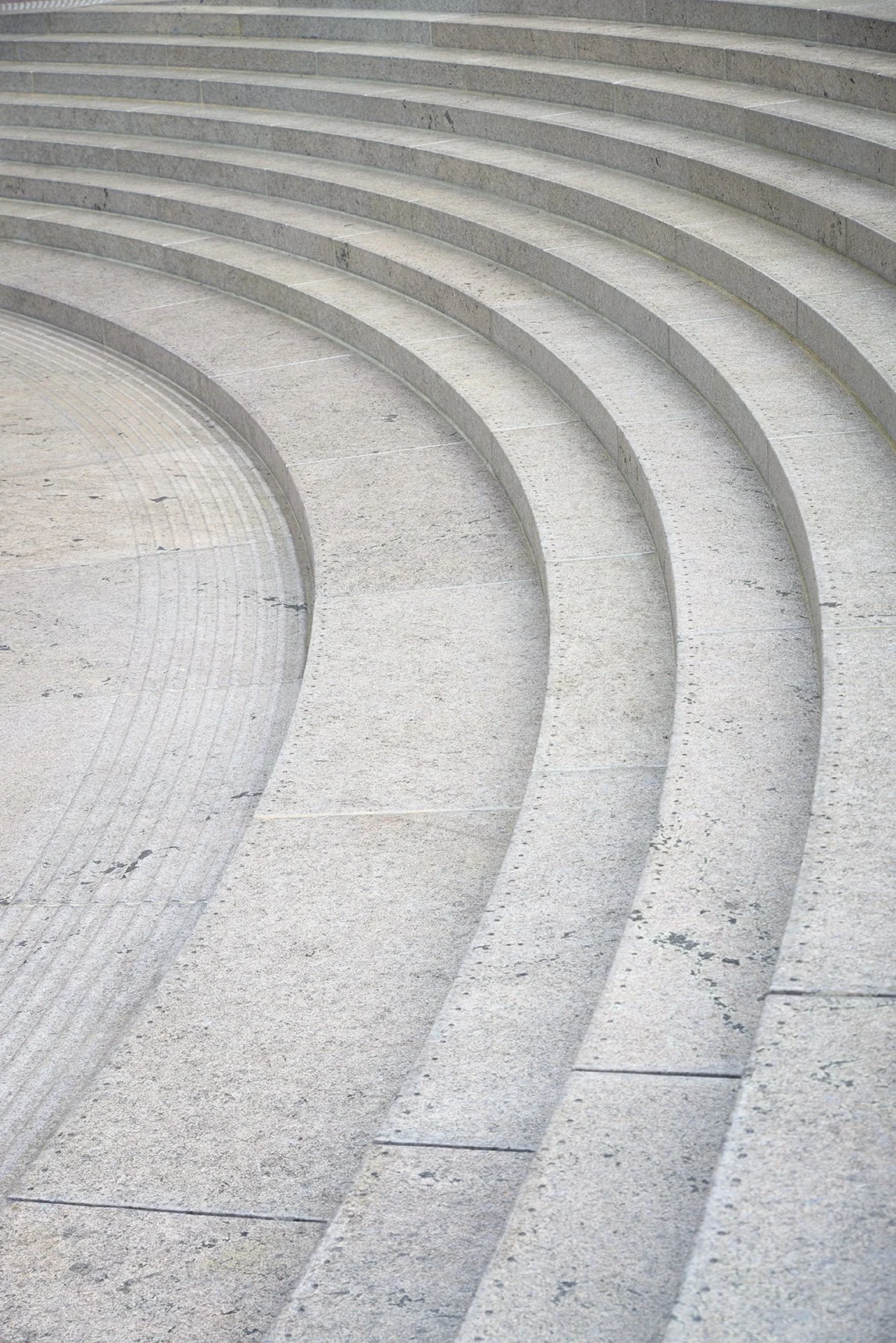
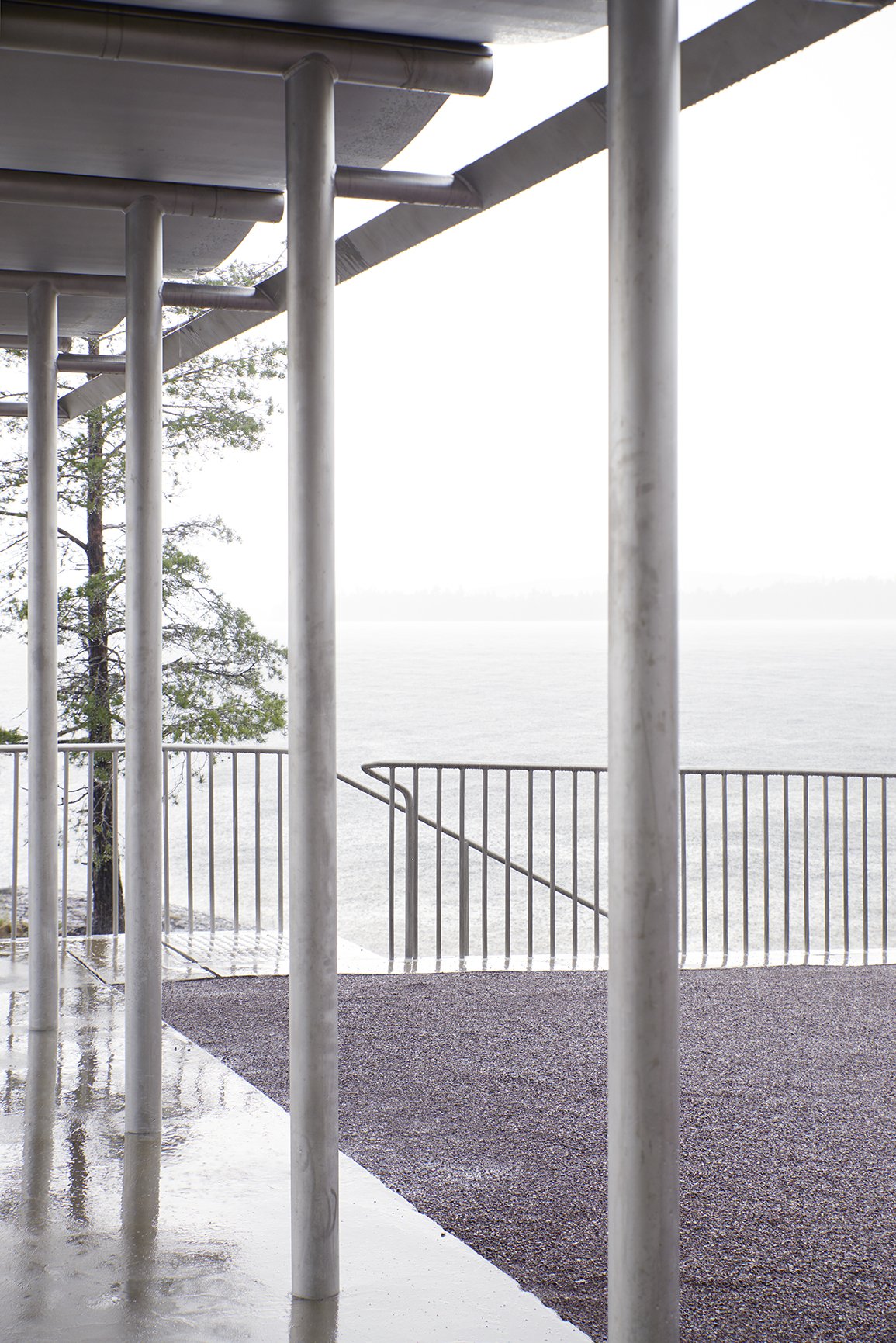
77 individually formed, solid bronze columns are placed on the first step of a stone stair by the water. Each column carries the name of a victim, each name is a unique relief. The stone stair continues out into the water where it forms a dock commemorating the locals who, in spite of risking their lives went out in their boats to help in the rescue operation.
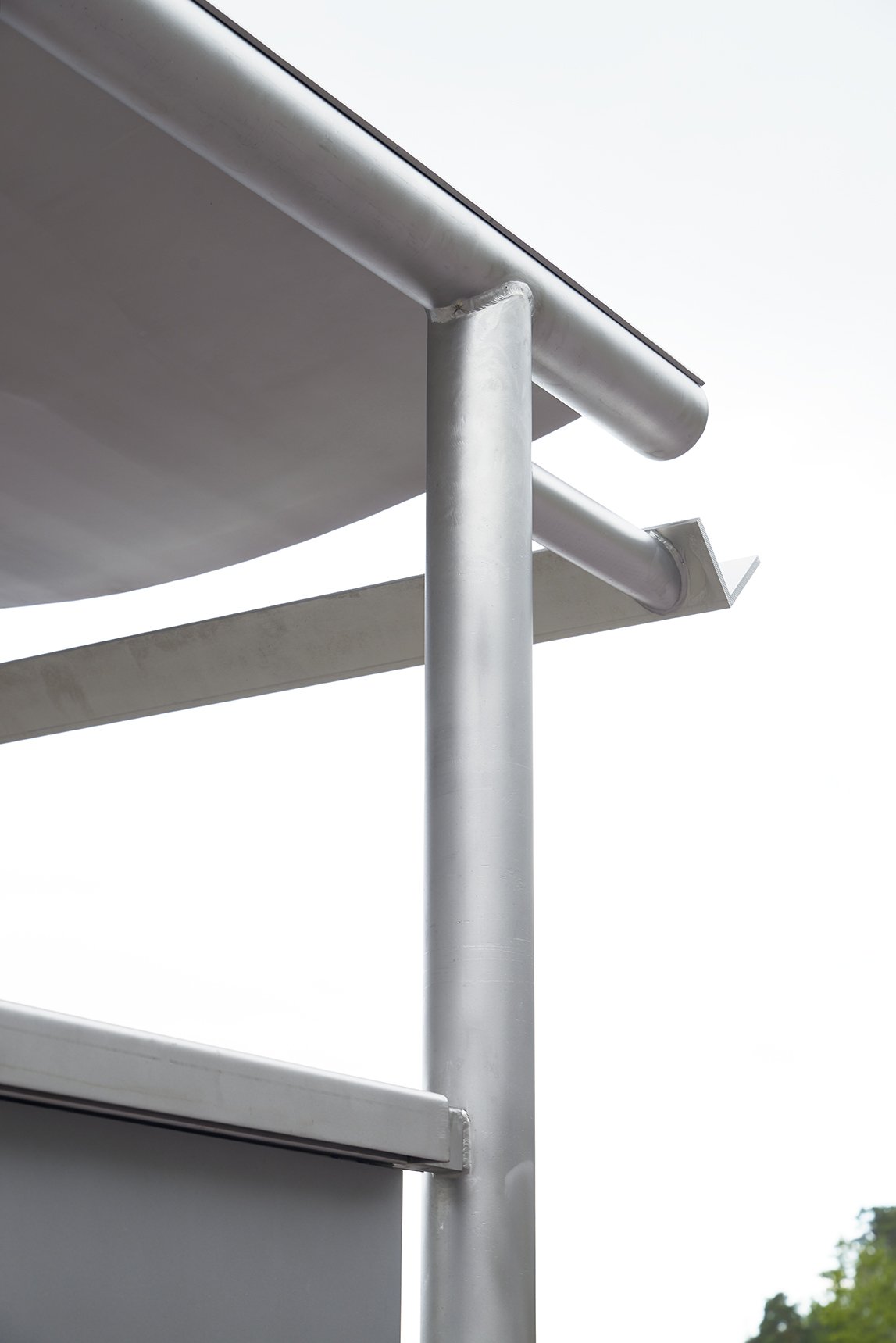
The utilitarian parts of the project; access road, technical facilities, dock, and shelter are built in concrete and sandblasted stainless steel. The ground is covered in local gravel of the same origin as the bedrock in the area.




Camp in Lofoten
Lofoten, Norway
Location: Lofoten, Norway
Year: 2022
Status: Unbuilt
Client: Private
Thirty simple cabins situated around a shared outdoor area on a stunning coastal site in the Lofoten archipelago.


Brunnsparken coffeshop
Gothenburg, Sweden
Location: Gothenburg, Sweden
Year: 2022
Status: Open competition, third prize
Photo Credit: manthey kula
A small kiosk: prefabricated modules clad in copper and green concrete elements.


Hamburgö house
Bohuslän, Sweden
Location: Bohuslän, Sweden
Year: 2021
Status: Built
Client: Private
Photo Credit: Karin Björquist, Sébastien Corbari, Mikael Olsson and manthey kula
Award: The Architectural Review AR House Award 2021 Highly Commended
In order not to destroy any part of the natural site by excavation, blasting or land-filling, the house is designed as a bridge spanning 29 meters from one bedrock plateau to another. The loadbearing structure consists of two laminated timber arches spanning across boulders left by the glacier more than 12 000 years ago. The arches were transported to the site by helicopter and bolted to steel brackets carefully placed and drilled into the granite. Two delicate steel trusses connect the building to the terrain bracing it against the heavy coastal winds.
The house is on grid; infrastructure and geothermal heating is brought to the structure through a non-load bearing “inverted chimney”. The interior of the house is characterized by the ever-changing surrounding nature and of the surprisingly slender arches that are visible in every room. Twelve sliding doors provide functional flexibility and unexpected visual passages through the plywood clad spaces. Exterior materials are chosen with regards to the climate; timber treated with iron sulfate, windows and doors covered in raw aluminum, fittings and structural elements in stainless steel and roof cladding in zinc.


National veteran monument
Oslo
Location: Akershus Festning, Oslo, Norway
Year: 2021
Status: Built
Client: Forsvarsbygg
Photo credit: Sébastien Corbari and manthey kula
A new national monument to honor all personnel that has served abroad for Norway after 1945. The monument offers a calm and peaceful place for relatives and other visitors, and will also be used for larger public events and memorial ceremonies . The project is also a transformation and restoration of the large square at Akershus Castle in Oslo.
A 100 meter long bench in the Norwegian national stone larvikite encircles an existing grove of linden trees, thus establishing a sheltered place for reflection and recognition.
On the inside of the stone bench the names of all international operations in which Norway has partaken after 1945 are inscribed. The operations are positioned in relation to the celestial directions: operations in Africa towards south, operations in Europe towards north, operations in Asia towards east and operations in America towards west.
Inside the memorial grove there are three bronze elements that relates to each of the three entrances. A small information sign. A large plaque carrying the names of everyone that has died in Norwegian service abroad after 1945. An eternal flame remind us that that the lost ones will not be forgotten.
In the western corner of the surrounding stone bench a bauta is placed as the focal point of public ceremonies outside the grove.


Bankplassen 4
Oslo
Location: Bankplassen, Oslo, Norway
Year: 2020
Status: Preliminary study
Client: Statsbygg
In collaboration with Arkitektkontoret Schjelderup & Gram, KAP kontor for arkitektur og plan
The project explores the possibilities of moving the Nobel Peace Center into the listed bank building that was designed as a stronghold to secure the Norwegian National Treasury. The activity of the much visited Nobel Peace Center spans from exhibitions to conferences. In order to provide better accessibility, the building’s east facade is opened up towards a new public square and a new entrance space is established in one of the former light wells of the old structure.


Landscape of the future
Paperwork
Year: 2020
Status: Paper work made for the celebration of the 100 years anniversary of LANDSKAB, the Danish Landscape architect’s magazine.
Photo Credit: manthey kula
Landscape means an area, as people perceive it, whose distinctive character is the result of the influence of and interaction between natural and/or human factors.* The title Landscape of the future calls for speculation about the balance between the natural and the man-made. Our contribution shows a series of constructed landscape images. The landscape images are based on structures and formations found in the 40 landlocked national parks in Norway.
*Landscape - Terms and definitions, Directorate for Nature Management, 2012


Hårr viewpoint
Hårr, Norway
Location: Hårr, Jæren, Norway
Year: 2020
Status: Unbuilt
Client: Norwegian Scenic Routes
Photo Credit: manthey kula
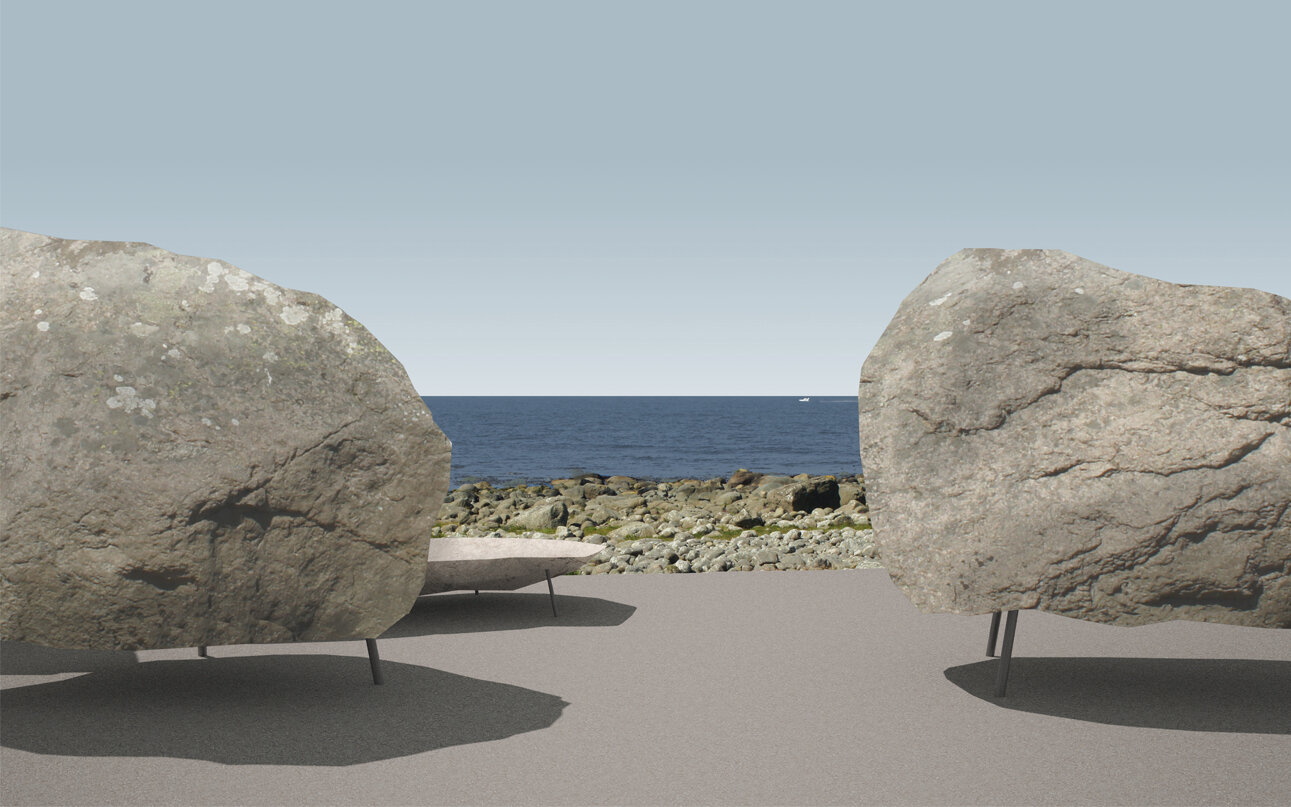
Transformation of an existing viewpoint and rest stop located on the shoreline of south west Norway. The landscape is characterized by the many stones and boulders brought to the coast by glacier movement during the ice age. Twenty two of these boulders are moved to the new plateau where some are cut to create surfaces for rest and use, while some are kept intact acting as buffers toward the heavily trafficked road.




Postludes
Paperwork
Year: 2020
Status: Paper work exhibitied at Betts Project, London, United Kingdom
Photo Credit: Betts Project and manthey kula
The exhibition Postludes takes its title from the last and conclusive element one might add to a construction, and draws attention to the nature and post-potential of architectural drawing.
The works found in Postludes operate as creative endeavour to afix a new and conclusive stage to a design process. Each work departs from one of manthey kula’s ongoing or completed projects from the last ten years. Instead of facilitating a schematic representaiton of the project, this new stage takes a more expressive exploration into form and architecture. The variously coloured papers are delicately cut, juxtaposed and layered, creating motives that deviate from their original plans yet hint at architectural features such as railing elements, gutter holes, ramps, elevations, walkways or columns. This process of cutting and further abstracting architectural forms and functions can be seen as methods of freeing content from their original meanings and reappointing it to new systems of architectural awareness, thereby unveiling new narratives and posing new enquiries into the possibilities of architectural drawing.


Other house
Paper project
Year: 2016
Status: Paper Project, exhibitied at CAMPO gallery in Rome, FRAC Centre-Val de Loire and at Budsjord pilegrimsgård
manthey kula was given a framework of a human emotion: hope, and an architectural principle: system. These two concepts were to be used as lenses to reflect upon two images by Walter Pichler from the FRAC archive of experimental architecture.
One structure, two inhabitants, one building, two territories, one nature.
The life in the house is told from A – Y.
Z is another story.

Window
Distant silence from the empty house below,
Rising to the rituals of the body, shedding warmth of sleep in front of glass.
Night is leaving, day is coming slow,
Cold feet on the floor while I watch the morning pass.
Early light across the curving wall, pointing to an aim.
Sudden movement, modest glimpses, all concluded in mutual recognition:
Rounded shoulder, naked neckline and the features of another face.
Thinking: Should I think of him by name?
Constant concrete framing figures fixed in opposition,
Projected longing to a shared horizon, nestled in between suspended space.


Table
Descending slowly into waves of light.
Where a solid echo protects the attributes of home.
Context – wild and tended – emerging into sight,
Reflected sun draws maps for eyes that roam.
Steel and concrete positioned with decision,
Fulfilled geometries eclipse the other life.
Sharing structure: are we seated at a common table?
Domesticity unfolds inside precision,
Space divides existences like a knife.
Our presences in orbit are not stable.


Fire
Expansion turning to contraction till the skin is circumscribed by wall,
Horizontal light moves inwards, finding refuge in a darkened apse.
Enclosed by cast construction, the threshold to the world is tall,
Your heat transported through the structure; a momentary lapse.
Balanced span and optimistic tension,
Support the sturdy slab and tender use,
Solitary flames uphold the common mound.
Inside a rare dimension,
Space is tight, but time is loose.
Looking outside to the outside ground.


Mirror
Rapid run to a common point,
Where independent systems meet and measure.
Separated and connected in a membrane joint,
Reflected eyes give pleasure.
Trembling surface, resonating footsteps in a stair,
My image in the mirror standing still:
Will you feel my presence when you pass?
Sudden shivers and a scent of moss is brought by air,
Silence kept by doubt and not by will.
Cyclic life is calling through the glass.


Forest
The house is left behind for open sky.
Beneath the feet a certain softness of the earth,
Myriads of nuances hit the eye:
Living matter reminiscent of birth.
Where you are enters my concern,
As I pass through heel high heather.
The ground is changing to a gentle slope.
I seek the forest in order to return,
Trunks and branches twined together.
This community of beings gives us hope.


Forvik ferry port
Vevelstad, Norway
Location: Forvik, Vevelstad, Norway
Year: 2015
Status: Built
Client: Norwegian Public Roads Administration
Photo Credit: manthey kula
A transparent structure through which one does not only see the old tavern across the bay , but also every part of the construction.
The service building consists of two concrete gable walls and an up side down vault of 10mm galvanized steel spanning between, and cantilevering past them. Underneath the roof are insulated spaces of slender wooden frames and glass. From inside the rooms one can see the continuous steel vault above the glass ceiling. The structure has an asymmetrical section with cantilevering awnings towards the south. The appearance of the building was never an intention in itself, but a result of the desire to expose every part of the structure and to make use of the static potential in the inverted vault.
The main focus for the landscape was to minimize the traffic area and give the intervention in the vulnerable coastal terrain a distinct, but subordinate form. This is achieved by eliminating ditches and retaining walls and by careful planning of the cutting of bedrock.


Ode to Osaka
Oslo
Location: The National Museum - Architecture, Oslo, Norway
Year: 2015
Status: Built
Client: The National Museum - Architecture
Photo Credit: Annar Bjørgli, Urs Meier Aegler, manthey kula
Manthey Kula was commissioned to develop a concept for realization of Sverre Fehn’s un-built competition proposal for a breathing space for the Osaka World Fair in 1970. The installation was built in Fehn’s last building; The Ulltveit Moe pavilion of the National Museum.
The installation’s relationship to the initial competition entry had to be solved and sorted out: Technical issues, matters of form and material, geometry, size and siting, and eventually that of exhibition content.
The work was not Sverre Fehn’s project for the Osaka World fair, but a contemporary installation based on, and honoring his idea. It was a structure consisting of an airlock building and an inflated, moving space. All details were developed so that the installation could be dismounted and re-erected.
There were no objects on show – only space.


Innisfree
Sligo, Ireland
Year: 2015
Status: Competition
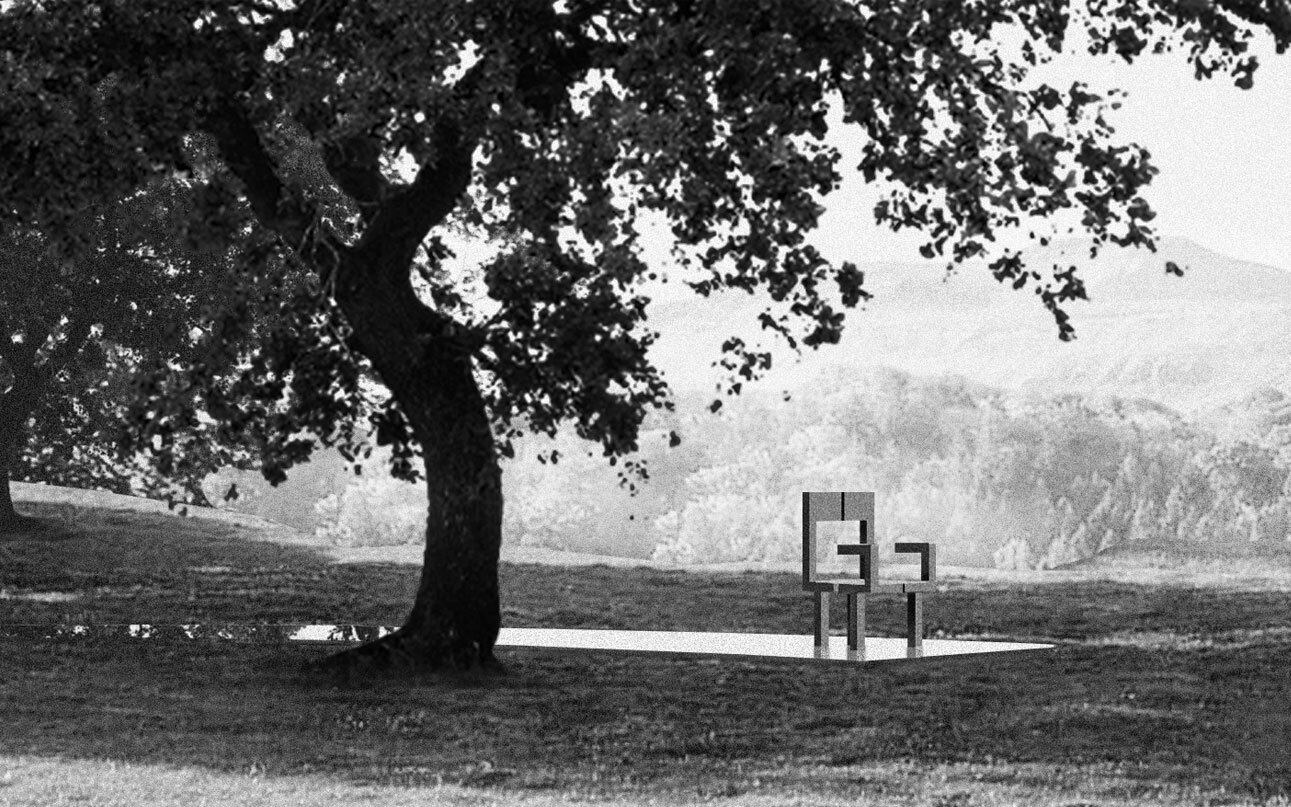
Open competition for an installation celebrating William Butler Yeats 150 years anniversary
What to protect? That which is still untouched and that which we long for
What to give? A specific place with a universal resonance
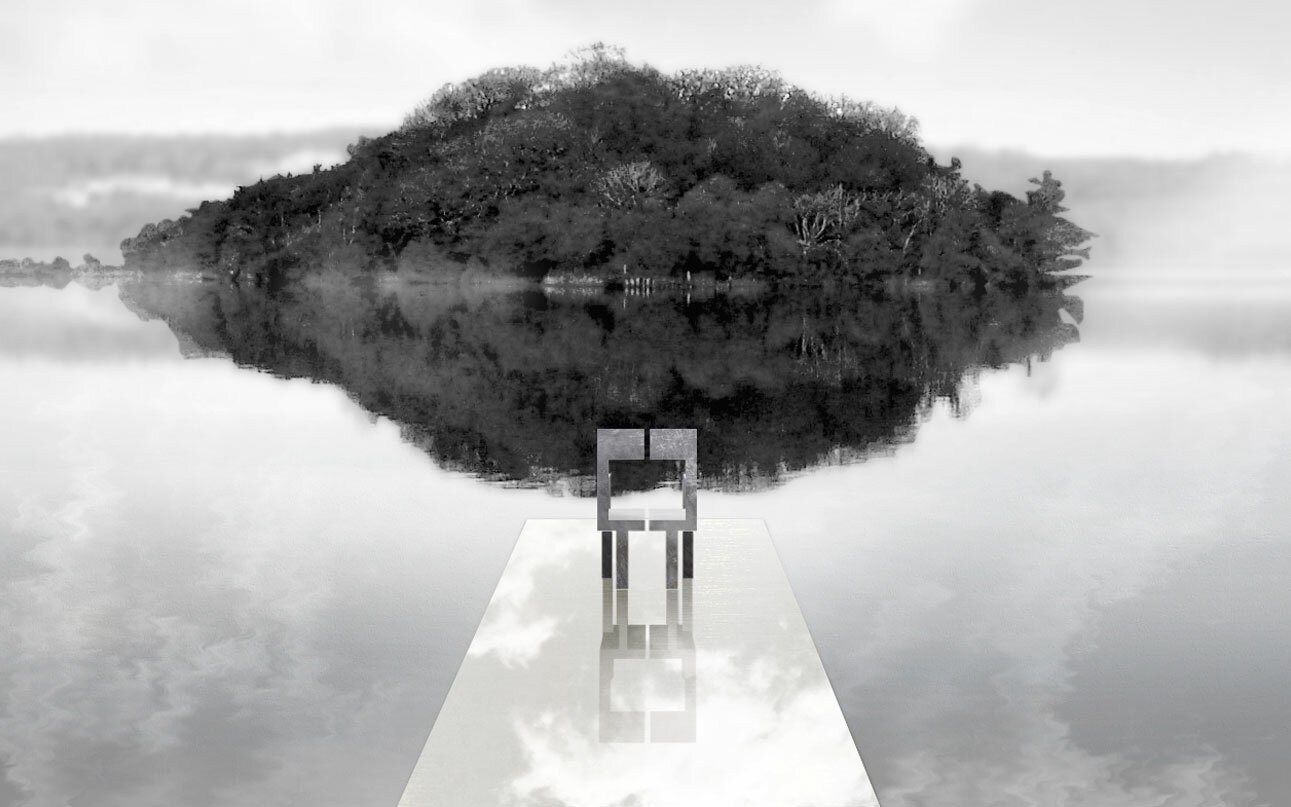
A highly polished stainless steel surface onto which a sculptural, yet functional steel chair is welded. Mounted on pontoons dimensioned to support the platform right above the water level.
In due time the steel floor will be transported to its final position at the university campus where the chair will continue to support lingering dreams.



Book crossing
Taipei, Taiwan
Location: Taipei, Taiwan
Year: 2014
Status: Built
Client: Taipei Free Artist's Association
Photo Credit: manthey kula
The small kiosk was part of Taipei’s preparation for becoming Design Capital 2016. Four international architects were invited to develop tiny structures with a public function for specific sites in the city.
Manthey Kula designed a book crossing where people of the neighborhood could meet and exchange used books. The white structure contrasted the colorful context, and the minimal interior captured scenes from the passing life and ever-changing city light.


MK521
Venice, Italy
Location: The Nordic Pavilion, Venice, Italy
Year: 2012
Status: Built
Client: The National Museum - Architecture
Photo Credit: manthey kula
MK521 was a sound installation for Venice Biennale 2012, the 50th anniversary of Sverre Fehn’s Nordic pavilion.
The project had two sources: The ffictional dialogue between Sverre Fehn and Andrea Palladio written by Fehn in 1964. and the module of 521 millimeters that Fehn made use of in the design of the iconic building.
The installation hung from one of the openings in the roof of the pavilion, designed to give space for a tree . The recorded dialog was played from a speaker suspended in a tailored trunk made of natural wool felt. During transport the piece was contained in a crate of fiberboard. When installed, the crate served as seating for the listener. The crate measured 521x521x521 millimeters, thus fitting the grid of the pavilion floor.


Tribunal for the displaced
Paper project
Year: 2012
Status: Paper Project, exhibitied in Venice, Italy
Photo Credit: manthey kula
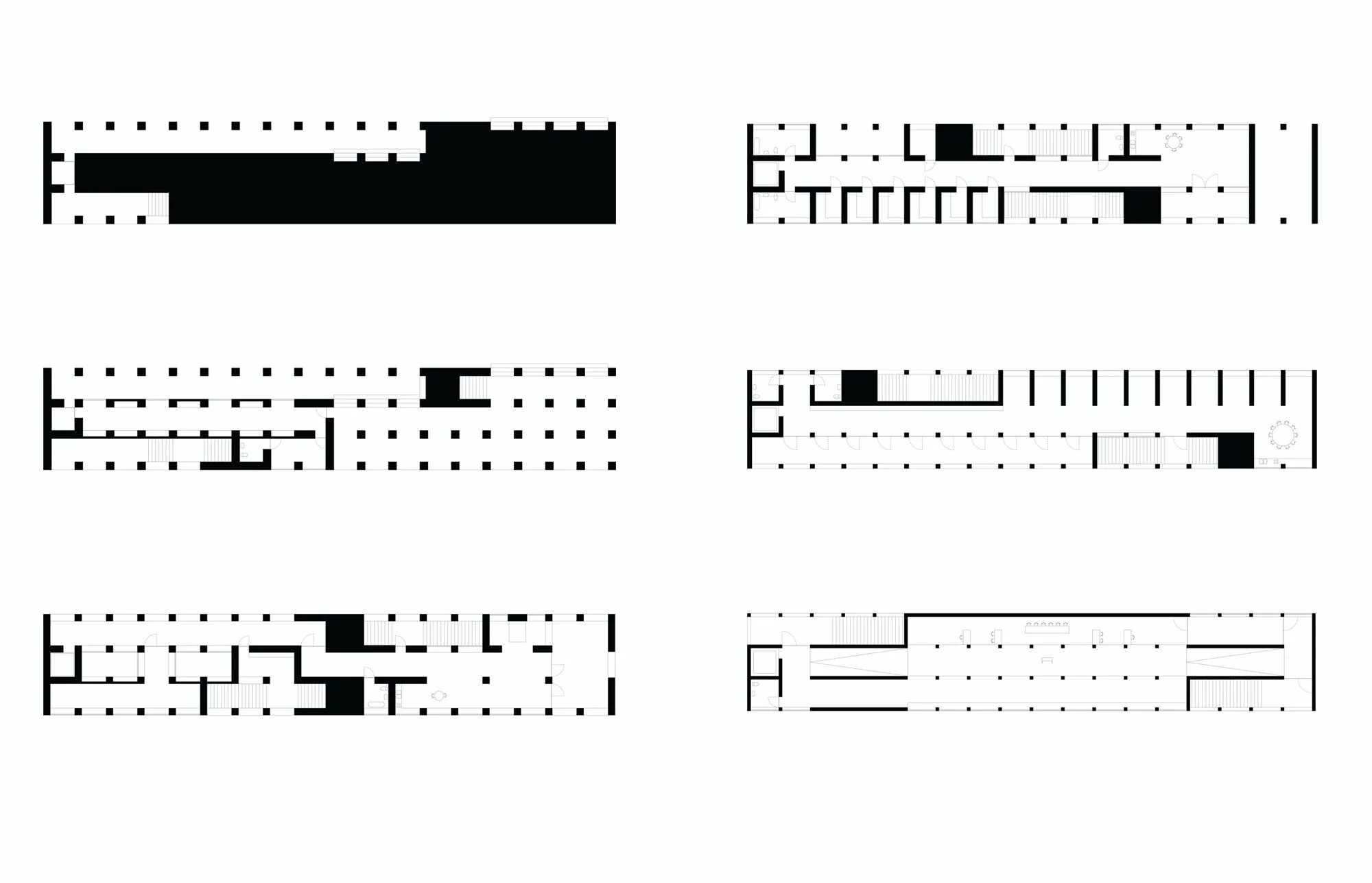
The tribunal gives architectural substance to questions concerning the individual and the collective, freedom and totalitarianism, silence and speech.
The project examines the possibility for a new social and architectural program based on interpretation of a contemporary global situation. It suggests a shift of questions concerning residency for migrants away from the national economic realm to the common ground of humanity. The tribunal is an institution based on the constant laws of compassion rather than on the ever-changing political agendas and bureaucracies. It is one of several courts that are established in regions of migration. An international body of justice administers these courts.
The displaced is whoever seeks legal residence, be it a refugee or a paperless immigrant. The objective of the tribunal is to decide whether the permit should be granted. The displaced testifies to a jury of six laymen, one from each continent appointed for a month-long service by the international administrative body. The assessment of each testimony is based solely on the jury’s opinion of the story of the displaced. If the permit is granted it is immediately produced and the migrant can leave the tribunal as a resident. If the jury is not convinced by the testimony he or she must return.
Each testimony and each jury decision is documented and archived. The archive of the tribunal will become a source to the understanding of a global situation and of the human heart.
The tribunal is situated in Cannaregio at the end of Calle de la Beccarie, overlooking Ponte Della Libertá.

THE DISPLACED
Each morning a group of displaced arrive at the dock by boat from a center on the mainland. The group ascends to the third floor where they await their turn to testify. The time spent in the tribunal waiting is stressful to most of the migrants. The secretary accompanies each migrant to the tribunal on the fourth floor. The hearing usually takes less than two hours, some times more. The desicion of the jury is given without disussion among its members. As such, every desicion is an individual concern for each memnber of the jury. If the jury finds the migrant’s testimony convincing, a residence permit is produced immediately by the notary. After having received the permit the new citicen leaves the tribunal, entering the city through the square in front of the building. At the end of the day the refused, if any , are transported back to the main land, later to return to their native contries.

THE PUBLIC
The hearings are open to the public. Sixty seats in the tribunal are intended for citizens, relatives, journalists, students and researchers. However, no interference of the testimonies is allowed. Apart from the voice of the migrant, and some muffled sound when the hands of the jury are shown after the testimony is over, the tribunal is very quiet. The square outside the tribunal is busy with people: the air is filled with anticipation and exclamations of joy and relief. Only seldom are there outbursts of anger or silent grief.

THE JURY
The jury consists of six laypeople, one from each continent. They are appointed for a month’s service by the international administrative body. Their assignment is to decide whether the displaced should be granted residency based on her or his testimony. The decision of the jury is a majority desicion where at least five of its members have to agree on the outcome. Each case is set without discussion. While in Venice, the six jurors stay in the quarters on the second floor of the tribunal building, where the meals are prepared and served by the caretakers. In the evening the jury members gather in the parlour or on the terrace to recapitulate the testimonies of the day.

THE SECRETARY
The secretary of the tribunal must speak Italian, English, Spanish and Chinese fluently. It is the secretary’s duty to facilitate the hearing procedures, set the schedules, inform each jury and the public of routines and requirements, arrange for qualified interpreters to be present when needed, and transcribe every testimony for archival purposes. The secretary is not expected to stay on for more than two years.

THE INTERPRETERS
Interpreters of Venice are summoned to the tribunal when their service is needed. In order to qualify one has to sign a non-disclosure agreement. The number of interpreters present each day depends on the origin of the migrants and the composition of the jury. The scheduling of the interpreters is organized by the secretary.

THE NOTARY
The notary is an official clerk whose role is to issue legally correct residency permits to those migrants accepted by the jury. The notary does not engage in the drama of the tribunal. While the displaced give their testimonies the notary arranges the documents and the legal stamps on the desk according to height, size and number.

THE CARETAKERS
The caretakers, a former migrant couple, maintain the daily routines in the building. They prepare meals for the displaced and look after the jury quarters and the waiting rooms. From their flat on the first floor they can reach all parts of the building. They are the only ones that have access to the stairway of the displaced.
THE ARCHIVIST
Every morning the archivist receives a file from the secretary where the testimonies of the day before are transcribed to English, Chinese and Spanish. The testimonies are archived according to date, country of origin and category. The largest categories in the archive are: war, persecution, famine, and hope. When the archivist is not filing or finding testimonies for citizens, journalists, relatives, researchers and students, he sits in his office trying to fathom the existential consequences of the outcome of the ongoing hearings.
